No hay ningún producto
Cuentos para pensar
5 %
dto.
dto.
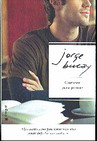
Cuentos para pensar
- EAN: 9788492981885
- ISBN: 9788492981885
- Editorial: Integral
- Año de la edición: 1753
- Encuadernación: Rústica
- Medidas: 140 X 220 mm.
- Páginas: 192
 (0 Comentarios)
Comenta y valora este libro
15,00 €
14,25 €
AGOTADO
Descripción
Tras llevarnos de la mano por los senderos mágicos de los cuentos ancestrales de Déjame que te cuente, Jorge Bucay nos ofrece ahora estas historias, fruto de su propia inventiva. Su objetivo es crear un vínculo con el lector en el que el cuento se convierta en un lazo único con el escritor. Bucay ante todo hace una apología de la solidez y la fiabilidad de la indiscutible mirada del sentido común.
Otros libros de Otros Autores
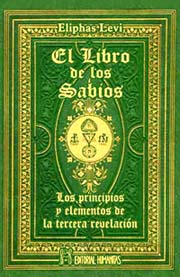
El Libro de los sabios
12,00 €
11,40 €
Siempre se puede decir "todo", porque solamente comprenderá quien debe comprender. El "Libro de los Sabios", verdadera síntesis de toda la realización de Eliphas Lévi, es, precisamente eso:
Un Verbo humano claro, preciso como un teorema, honesto como una ley natural en acción, hermoso como una ley natural en acción, hermoso como una elegía espontánea, vibrante como un himno de amor al Creador y a sus múltiples manifestaciones. Un Verbo humano que llega a unirse en modo tal al Verbo humano que llega a unirse en modo tal al Verbo Manifestado que refleja Su Verdad, con Su sencillez y Su Belleza.
Comentario de PAPUS acerca de la obra de Eliphas Lévi y en particular sobre este libro
5 %
dto.
dto.
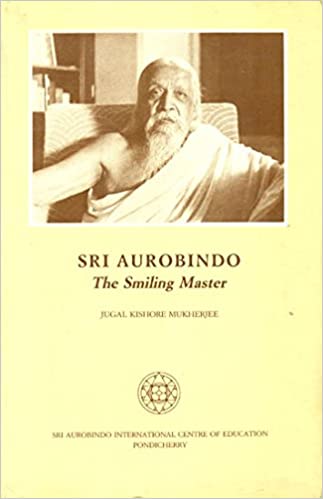
Sri Aurobindo the Smiling Master
13,00 €
12,35 €
Since the passing of Sri Aurobindo in 1950 many research Publications have seen the light of day dealing with various aspects of Sri Aurobindo's life-work and teachings. But to our knowledge no book has so far been published exclusively devoted to the study of Sri Aurobindo's humorous writings. the present book hopes to break new ground in this particular
field.
Apropos of Nirodbaran's Twelve Years with Sri Aurobindo he Mother had once remarked: "Thanks to Nirod, we have a revelation of an altogether unknown side of what Sri Aurobindo was. It is extremely interesting and very instructive." It is the fond and humble hope of the writer of the present work that the readers will find in its pages another not so well-known but lovable side of the Master's personality revealed in ample measure, To our happy surprise we shall meet here "not the Sri Aurobindo of Himalayan grandeur and aloofness, but the modern Shakespeare of spiritual sublimity and jollity".
This is a book on humour. But, as Prof. Stephen Leacock has pointed out, "Articles and books on humour are apt to resolve themselves into a series of jokes and stories, or to take on all the appalling dullness of undiluted theory." In the present work the author has tried to strike a happy mean. Hence the sub-title, "Sri Aurobindo's Humour: An Analysis and an Anthology". The book does not reduce itself to the task of a bare 'assembling' of jokes and witty remarks made by Sri Aurobindo nor does it degenerate into an unmitigated theorising. This is avowedly a book of research analysis, an analysis of The canons and principles and art of humour; but, in each case, appropriate examples have been immediately cited to illustrate the principle discussed, followed by a full quota of Sri Aurobindo
5 %
dto.
dto.