No hay ningún producto
Vida y muerte de Krishnamurti (1895-1986): biografía de J. Krishnamurti
5 %
dto.
dto.
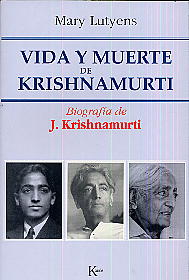
Vida y muerte de Krishnamurti (1895-1986): biografía de J. Krishnamurti
- EAN: 9788472456013
- ISBN: 9788472456013
- Editorial: Editorial Kairós, S.A.
- Año de la edición: 2018
- Encuadernación: Rústica
- Medidas: 0 X 0 mm.
- Páginas: 320
 (0 Comentarios)
Comenta y valora este libro
12,00 €
11,40 €
Disponible 48/72 horas
Descripción
La enseñanza de Krishnamurti ha llegado en un momento crítico den la historia de la humanidad", afirma Mary Lutyens. El popular maestro espiritual, que murió en 1986, pensaba que la paz global era posible si los niños eran educados sin prejuicios, sin nacionalismos, sin competitividad -e incluso sin sistemas religiosos org anizados-. Con la esperanza de despertar a la humanidad, Krishnamurti preconizaba la completa autotransformación como condición previa para cualquier cambio social o político. En este inteligente y ameno estudio biográfico, Lutyens aporta un tertimonio detallado de las experiencias místicas del maestro, su ruptura con la teosofía y sus asociaciones con David Bohm o Jacob Needleman
Otros libros de Otros Autores
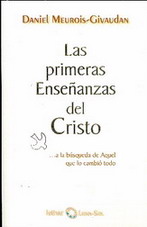
Las primeras enseñanzas del Cristo : a la búsqueda de aquel que lo cambió todo
17,00 €
16,15 €
Las primeras enseñanzas del Cristo
5 %
dto.
dto.
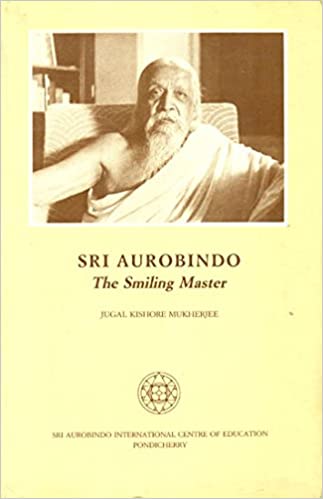
Sri Aurobindo the Smiling Master
13,00 €
12,35 €
Since the passing of Sri Aurobindo in 1950 many research Publications have seen the light of day dealing with various aspects of Sri Aurobindo's life-work and teachings. But to our knowledge no book has so far been published exclusively devoted to the study of Sri Aurobindo's humorous writings. the present book hopes to break new ground in this particular
field.
Apropos of Nirodbaran's Twelve Years with Sri Aurobindo he Mother had once remarked: "Thanks to Nirod, we have a revelation of an altogether unknown side of what Sri Aurobindo was. It is extremely interesting and very instructive." It is the fond and humble hope of the writer of the present work that the readers will find in its pages another not so well-known but lovable side of the Master's personality revealed in ample measure, To our happy surprise we shall meet here "not the Sri Aurobindo of Himalayan grandeur and aloofness, but the modern Shakespeare of spiritual sublimity and jollity".
This is a book on humour. But, as Prof. Stephen Leacock has pointed out, "Articles and books on humour are apt to resolve themselves into a series of jokes and stories, or to take on all the appalling dullness of undiluted theory." In the present work the author has tried to strike a happy mean. Hence the sub-title, "Sri Aurobindo's Humour: An Analysis and an Anthology". The book does not reduce itself to the task of a bare 'assembling' of jokes and witty remarks made by Sri Aurobindo nor does it degenerate into an unmitigated theorising. This is avowedly a book of research analysis, an analysis of The canons and principles and art of humour; but, in each case, appropriate examples have been immediately cited to illustrate the principle discussed, followed by a full quota of Sri Aurobindo
5 %
dto.
dto.