
No hay ningún producto
Islas de Salvación

Islas de Salvación
- EAN: 9789501725193
- ISBN: 9789501725193
- Editorial: Kier
- Año de la edición: 2000
- Encuadernación: Rústica
- Medidas: 11 X 15 mm.
- Páginas: 108
 (0 Comentarios)
Comenta y valora este libro
4,60 €
4,37 €
AGOTADO
Otros libros de Otros Autores

El proyecto Atman: una visión transpersonal del desarrollo humano
18,00 €
17,10 €
El desarrollo es evolución, la evolución es trascendencia, la trascendencia tiene como meta final la Conciencia Superior. He aquí el «proyecto Atman», el impulso de Dios hacia Dios, de Buda hacia Buda, de Brahma hacia Brahma, mediado inicialmente por la psique humana, con resultados que oscilan entre lo extático y lo catastrófico.
El punto de partida es el primer período de la infancia humana, cuando el neonato está inseparablemente unido con la madre y con el medio, un estado que se convierte en modelo de los estados adultos de unión trascendente o mística. Pero el autor señala la necesidad de distinguir entre el «paraíso prepersonal» del infante, donde todo es «ignorancia», y el paraíso post-personal que sigue al despertar adulto. Inspirándose parcialmente en la psicología del desarrollo de Jean Piaget, y estableciendo una terminología propia, Ken Wilber explica el proceso de diferenciación de la mente egoica y del cuerpo hasta alcanzar la unión transpersonal.
El proyecto Atman ha sido acogido con enorme entusiasmo en el mundo intelectual, particularmente por su fama de compaginar la psicología oriental con la occidental. «No conozco ninguna obra que iguale a El proyecto Atman», escribe Huston Smith. «Ken Wilber es el nuevo Einstein de la investigación sobre la conciencia», proclama John White. «Erudito sin trivialidades, metafísico sin ser abstruso», dice Stanley Krippner. «La mejor integración de las psicologías oriental y occidental», según Claire Myers Owens.
5 %
dto.
dto.
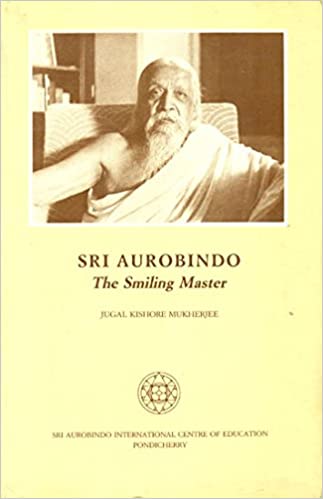
Sri Aurobindo the Smiling Master
13,00 €
12,35 €
Since the passing of Sri Aurobindo in 1950 many research Publications have seen the light of day dealing with various aspects of Sri Aurobindo's life-work and teachings. But to our knowledge no book has so far been published exclusively devoted to the study of Sri Aurobindo's humorous writings. the present book hopes to break new ground in this particular
field.
Apropos of Nirodbaran's Twelve Years with Sri Aurobindo he Mother had once remarked: "Thanks to Nirod, we have a revelation of an altogether unknown side of what Sri Aurobindo was. It is extremely interesting and very instructive." It is the fond and humble hope of the writer of the present work that the readers will find in its pages another not so well-known but lovable side of the Master's personality revealed in ample measure, To our happy surprise we shall meet here "not the Sri Aurobindo of Himalayan grandeur and aloofness, but the modern Shakespeare of spiritual sublimity and jollity".
This is a book on humour. But, as Prof. Stephen Leacock has pointed out, "Articles and books on humour are apt to resolve themselves into a series of jokes and stories, or to take on all the appalling dullness of undiluted theory." In the present work the author has tried to strike a happy mean. Hence the sub-title, "Sri Aurobindo's Humour: An Analysis and an Anthology". The book does not reduce itself to the task of a bare 'assembling' of jokes and witty remarks made by Sri Aurobindo nor does it degenerate into an unmitigated theorising. This is avowedly a book of research analysis, an analysis of The canons and principles and art of humour; but, in each case, appropriate examples have been immediately cited to illustrate the principle discussed, followed by a full quota of Sri Aurobindo
5 %
dto.
dto.